
“The Christ Child”
“When houses are brightly lit and hearts are stirred,
a magic then unites people.”
When I was a child, I could hardly wait for Christmas. Helping with baking cookies and decorating the house were among my favorite activities. However, on December 24, as a child, I was not allowed to be present for the final preparations. My grandmother took care of decorating the Christmas tree, and my mother wrapped the last presents and placed them under the tree.
Dinner was then served between 5:00 PM and 6:00 PM. Usually, it was salmon and white bread, at least as far as I can remember. Today, it is quite different.
At some point, my grandmother disappeared, and my mother said she had gone to open the bedroom window so that the Christ Child could also come in and leave the presents. I was always very excited, and the anticipation was the best part!
Then I heard a little bell gently ringing! That was the sign that the Christ Child was there, and I was allowed into the room. The candles were burning, and the presents lay under the Christmas tree. After we had sung Christmas carols, including “Silent Night, Holy Night,” we blew out the candles, and I was allowed to distribute the presents.
By the way, I still do that! And ringing the bell is now my task.
Unlike in other countries, the Christ Child still brings the presents here.
As we know, in many places, it’s Santa Claus or Father Christmas.
New Year’s Eve – At Our Home
After all the festivities and visits with family and friends, the turn of the year is already upon us!
In the city, the Christmas stalls transform into New Year’s Eve stalls. Instead of Christmas baubles, you can now buy little pigs, shamrocks, fly agaric mushrooms, and horseshoes, which are said to bring good luck.
A lovely tradition at our home was lead pouring. Small lead figures were melted in a spoon over a candle flame. Afterwards, the molten lead was poured into cold water. We then took the figure out of the water and tried to interpret what it might represent. We never really agreed.
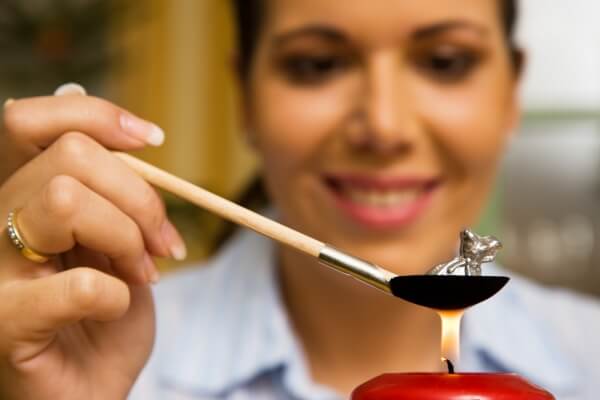
However, lead pouring has been banned since New Year’s Eve 2018. More on that here
Of course, at midnight, there was always fireworks in our garden, and in our neighbors’ gardens too. The sky full of lights. Such a sight is truly beautiful.
But even before heading into the garden, there was a lentil salad, in Styria, with pumpkin seed oil and onions. Because lentils are also supposed to bring luck and money in the new year.
The New Year’s Eve Pummerin bell in St. Stephen’s Cathedral is the grand finale – the famous bell that rings us into the new year. At the twelfth stroke of the bell, it’s time for: “Alles Walzer” (Everyone Waltz!) and everyone dances to Johann Strauss’s “Blue Danube Waltz.”
For many, the new year begins on January 1 with a New Year’s Concert by the Vienna Philharmonic. If you have never heard it, I can only advise you to get tickets.
Customs & Rituals Around Christmas
Peculiarities in Other Cultures & Countries
Just like us humans, customs and rituals vary, and therefore, we would like to give you a small insight into how traditions differ or resemble each other.
Austria
“Nativity Scene Viewing” in the City and Province of Salzburg
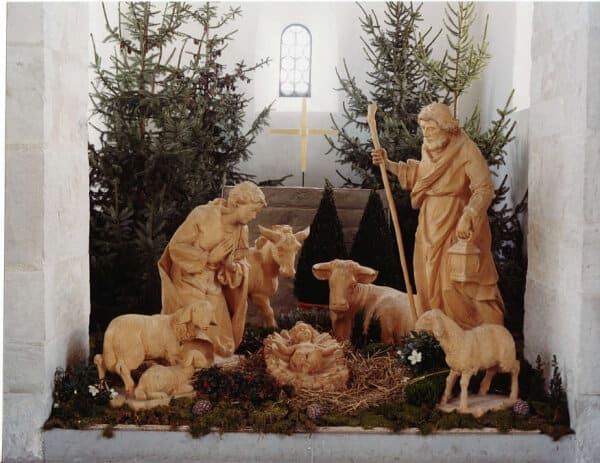
A lovely tradition in Salzburg to shorten the wait for the Christ Child is to stroll with the children from church to church on December 24. Almost every church in Salzburg – and there are many – has a Christmas nativity scene. This is the depiction of the birth of Christ in a model landscape.
The figures are usually artfully carved from wood. Mary and Joseph, an ox and a donkey, a few shepherds and sheep are arranged in a stable open at the front. For the baby Jesus, an empty manger with straw is set up during Advent (from early December). He is soon to be born.
In the Salzkammergut, for example, around Lake Traunsee, there is the tradition of the “Kripperl-Roas”, which means something like a “nativity scene tour.” Many of the old nativity scenes, inherited over generations, are set up in private homes. These open their doors to visitors during Advent, usually for a small donation.
Slovakia
In Slovakia, Christmas customs begin as early as December 13, as this is Lucia’s name day. It is customary for unmarried girls to write the names of potential future partners on 11 slips of paper. Each day, one slip is discarded. The last slip the girl opens on December 24 bears the name of her future husband.
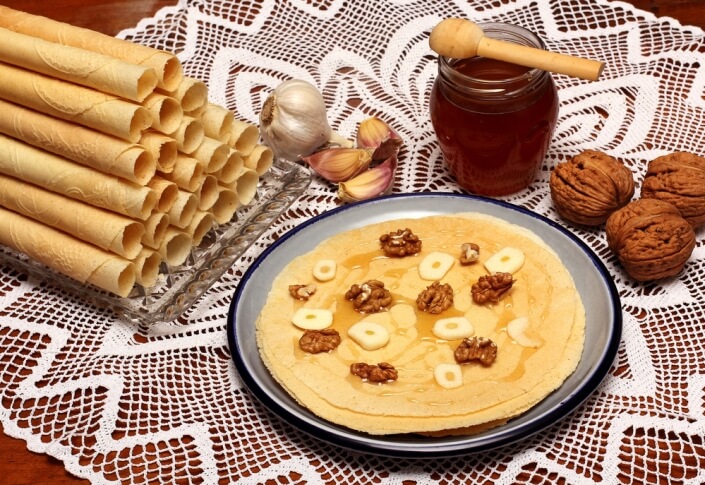
In the evening, Christmas wafers with honey and garlic are eaten, apples are cut, and the slices are distributed among the people at the table.
Later, traditional sauerkraut soup (usually with little meat), milk sauerkraut soup with “posuch,” or lentil soup (the lentils are meant to symbolize prosperity – money) and fish with potato salad are eaten.
However, the main course for Christmas in Slovakia depends heavily on the region. In the western part of Slovakia, fish is often eaten, while in Central and Eastern Slovakia, sauerkraut soup or various types of soups with simple flour dishes (these are not desserts, but something similar to dumplings, flatbreads, or cakes served as a side dish with soup) are more common.
On December 24, Christmas is celebrated and Christmas presents are received. In Slovakia, the Christ Child brings gifts to children on December 24. On the following two days, close family is visited. On December 26, the first parties (Stephen’s Party) take place. The ball season begins.
Czech Republic
In the Czech Republic, you receive gifts not from Santa Claus but from the Christ Child, in Czech “Jezisek.” The gifts magically appear under the Christmas tree. So, if you hear a little bell gently ringing, hurry to the Christmas tree and see what the Christ Child has brought you.
If you fast all day, you will see a golden piglet. No one knows exactly why, but that’s how it is.
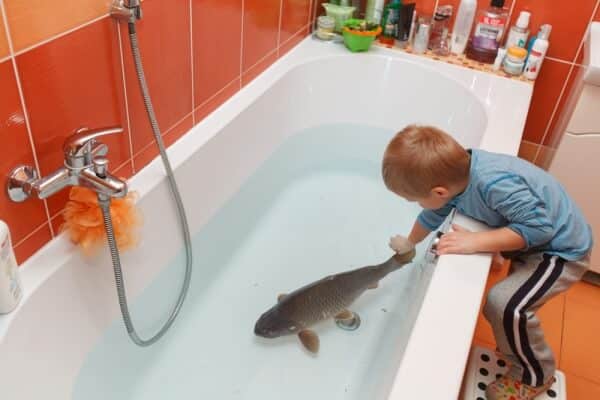
Furthermore, you might have to share your bathtub with a carp. For some, this tradition is animal cruelty. It is customary to eat carp on December 24. To guarantee the fish is fresh, many buy a live carp and kill it themselves. Until then, however, the carp must remain in your bathtub. It is also said to bring good luck to keep a fish scale in your wallet. This ensures you will have money in the new year.
Ukraine & Russia
Gifts are distributed on St. Nicholas Day and are less common at Christmas.
The Christmas celebration is on January 7 according to the Julian calendar, followed by “Old New Year” on the 14th and Epiphany on the 19th.
A widely known custom for the latter is the ritual bath in the freshly blessed river or pond – which in the region always involves first sawing a hole in the ice cover.
Ukraine
On Christmas Eve, after a strict day of fasting, there is a meal consisting of 12 different dishes.
People abstain from meat, eggs, dairy products, and alcohol (!). Typical dishes include Borshch (beetroot soup) and Varennyky (dumplings filled with potato mash, cabbage, or mushrooms).
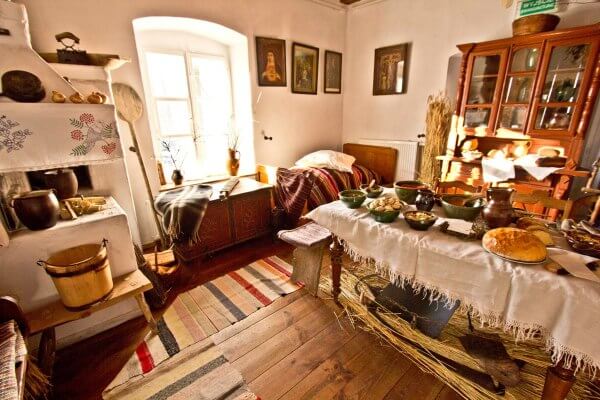
To recreate the atmosphere of the stable (where the manger stood), some hay is placed under the tablecloth, which is terribly impractical because glasses constantly fall over. There is always an extra place setting, as one symbolically prepares for a surprise guest.
Italy
Unlike in Austria, Italians celebrate Christmas on December 25, but on December 24, there is a large family dinner called “cenone.”
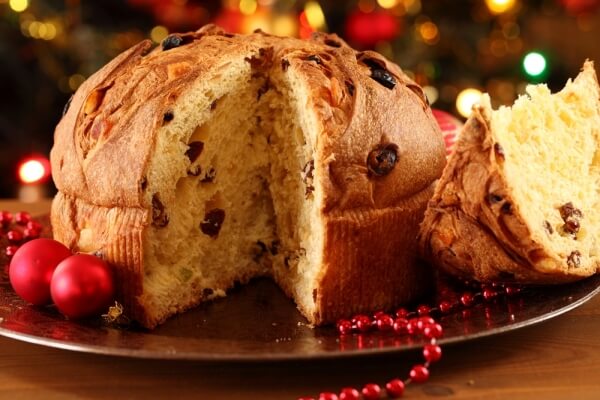
Of particular importance for children is the Befana, an old woman who flies from house to house on a broomstick to fill children’s stockings with sweets: good children get candies, naughty ones only a piece of coal.
France
In France, December 25 is Christmas and a public holiday. On the evening of December 24, the whole family gathers for a large festive meal.
Not every family eats the same thing, of course, but there are commonalities. Generally, we eat seafood as an appetizer. This can include oysters, langoustines, lobster, etc.
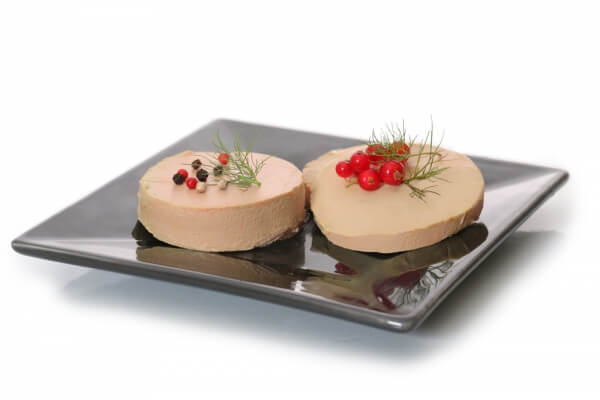
Finally, there is dessert. The traditional dessert is called “la bûche de Noël” and is a frozen dessert. “La bûche” means “log,” which is placed in the chimney to make a fire, and since the frozen dessert has the same shape, it got its name. It is a very high-calorie dessert, with a lot of cream in it, which is why we often eat only a small portion.
Before going to bed, children place their slippers under the Christmas tree. It is said that Santa Claus comes down the chimney during the night and places the gifts next to the slippers. In the morning, we open the gifts together.
December 25 is usually a very quiet day. There is often another big meal at noon, and it is an opportunity to spend time with family. On December 26, everyone goes back to work.”
Australia
December 25. 30 degrees Celsius outside. The sound of the ocean. Surfers walking around with Santa hats. Australia in Christmas fever. The Christmas holidays are in the middle of summer, so most people are out and about celebrating Christmas. Be it at the beach or in the park, usually with a BBQ, grilling, and a cold beer in hand. Christmas in Australia!
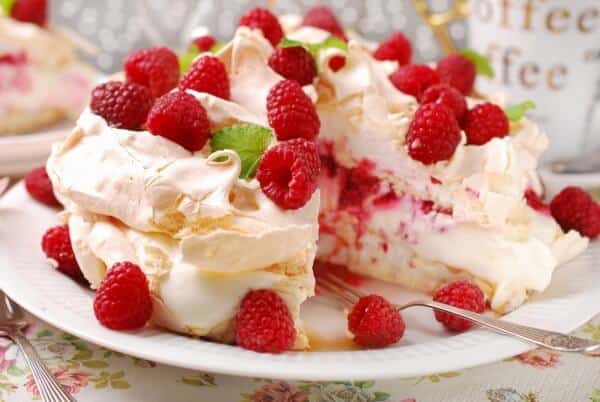
After the main course (usually lamb or chicken or a selection of fresh seafood), there is a traditional Australian dessert – Pavlova. Every mother has her own recipe, but it always tastes good and consists mostly of sugar with fruit on top.
Click here for the recipe (in English)
Customs & Rituals Around New Year’s Eve
Spain
In Spain, New Year’s Eve is called “Nochevieja.”
On this evening, Spaniards gather either in Madrid’s famous Puerta del Sol square to eagerly await the ringing of the clock tower at midnight. It is a tradition to eat one grape with each chime of the bell, making a total of 12.
It is also important that Spaniards traditionally start January 1, the end of New Year’s Eve, with a breakfast of chocolate con churros, a pastry similar to doughnuts, which is dipped in chocolate.
Austria
“Star Shooting/Böllerschießen” in the City of Salzburg
Every year on New Year’s Eve, December 31, the New Year’s Eve Star Shooting takes place in the city of Salzburg.
The so-called “Prangerschützen” (ceremonial shooters) stand on the bastions of Salzburg’s local mountains (Mönchsberg, Kapuzinerberg, Festungsberg) and fire their ‘Prangerstutzen’ on the last day of the year. Here’s a short video
These are rifles 50 to 70 cm long and weighing 15 to 30 kg, loaded with 50% black powder, which cause a very loud bang when ignited. The name is derived from this: prang = noise, splendor, sensation.
This noisy custom culminates around 4:00 PM in the city of Salzburg. Then it’s time for everyone: “Don’t stand too close to the shooters and cover your ears!” For many Salzburg residents, it’s a fixed point for the year-end celebration.
Italy
In Italy, people wear (“Capodanno”) red underwear (“biancheria intima rossa”) on New Year’s Eve, which is then discarded the next day. This is a symbol of female and male fertility and is also said to bring good luck in the new year.
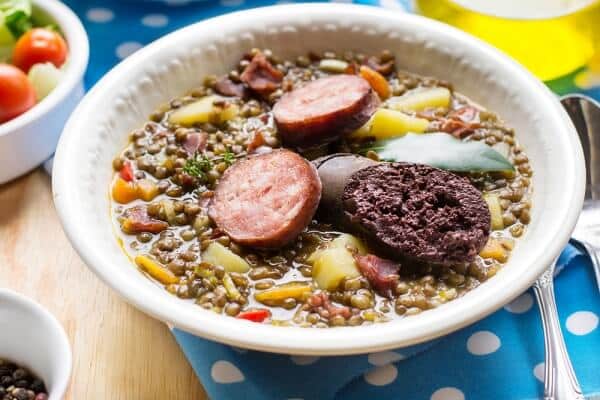
They also eat lentils with blood sausage on New Year’s Eve: le lenticchiecon il cotechino
Turkey
In Turkey, the New Year is welcomed with decorations, special food, parties, and fireworks. The New Year’s celebration is for the family: dinner together with the family, with many delicacies such as roasted turkey, followed by board games, television, music, and toasts.
Fireworks are an important part of the New Year’s celebration. Private fireworks in the streets and the city’s grand fireworks display exactly at 00:00, which illuminates the sky for many minutes.
The New Year’s lottery is also a tradition in Turkey, and buying a ticket as a gift is widespread. Gifts for family, colleagues, or friends are prepared and placed under a decorated New Year’s tree, a pine. The gifts are distributed on December 31 or on the last working day.
Slovakia
For New Year’s Eve and New Year’s Day, sauerkraut soup with sausage and meat is eaten – in contrast to Christmas.
China
2019, the Year of the Pig (February 5, 2019 – January 24, 2020)
The Chinese New Year festival, also known as the Spring Festival, is the most important traditional festival and holiday in China. The festival falls on the first day of the first month in the Chinese calendar (usually late January or early February) and ends with the Lantern Festival on the 15th day thereafter.
The traditional customs for the Spring Festival, which originated several millennia ago, are largely followed to this day.
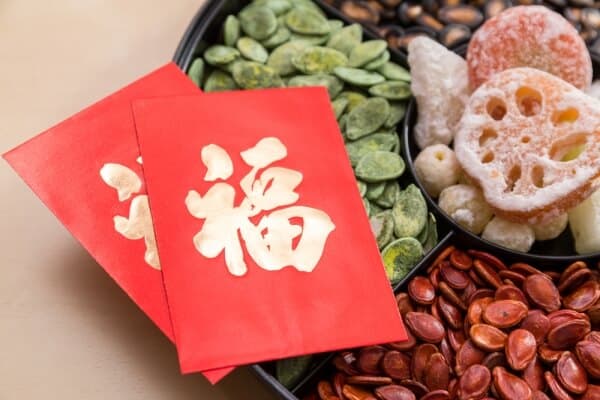
Giving red envelopes
Like at Christmas, people exchange gifts during the Spring Festival. The most common gift is the red envelope. Red envelopes contain money. Red envelopes are considered symbols of good luck and money.