
Easter is either a time for reflection or an excuse for many to indulge in chocolate. There are some things, like Easter eggs, chocolate bunnies, and chocolates, that are common worldwide at Easter. Nevertheless, from North to South
and from East to West, there are many differences. In our research on Easter traditions around the globe, we discovered some truly interesting and fascinating traditions from Australia, Europe, Mexico, and other nations. Or did you know that in Florence, Italy, fireworks are set off in the middle of the city?
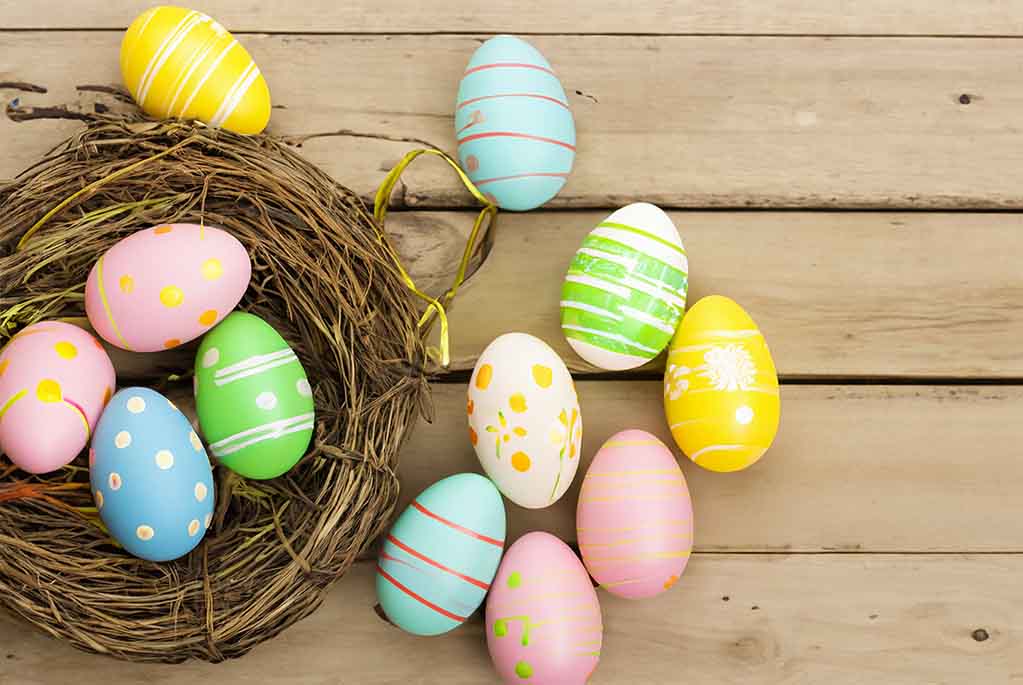
In almost all Easter customs worldwide, the egg is included, as it symbolizes resurrection in Christian tradition. The chick hatching fresh from the egg is reminiscent of Jesus’ resurrection on Easter Sunday. However, the egg also plays an important role as a symbol in other religions and pagan customs. In the Jewish Passover festival, for example, the egg stands for human fertility, but also for the fragility of human destiny.
However, the decorating of eggs has an older origin than the Christian tradition. Decorated ostrich eggs were already found in ancient Egyptian tombs. Early Christians painted the eggs red to commemorate the blood of Jesus. But the dyeing in different colors originated from the need to identify the age of the eggs. Since no meat or eggs were eaten during Lent from Ash Wednesday until Easter, the eggs were hard-boiled and dyed differently. This way, older eggs could be distinguished from newer ones.
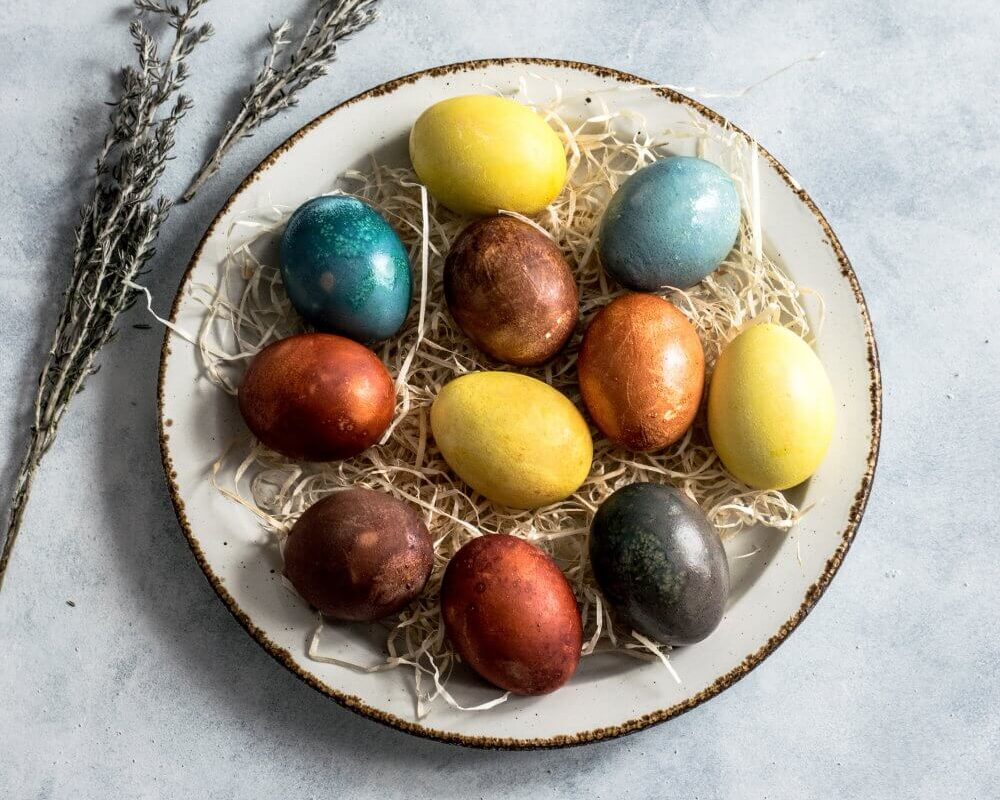
Today, the Sorbs are particularly known for their elaborately decorated Easter eggs. Here, different colors symbolize different qualities:
- Red stands for the sacrificial death of Christ
- White symbolizes purity
- Green stands for youth and innocence
- Yellow stands for the desire for wisdom and enlightenment
- Orange symbolizes strength, endurance, and ambition
Where does the Easter Bunny come from?
In German-speaking countries, it is the Easter Bunny that hides the eggs in the garden. It has prevailed against originally present animal competitors such as the Easter fox, the stork, and the rooster. It also exists in the USA as the “Easter bunny.” There is no precise explanation for its origin, but the rabbit, like the egg, could symbolize resurrection and fertility, thus securing its firm place in the Easter festival.
What is the meaning of the Easter bonfire?
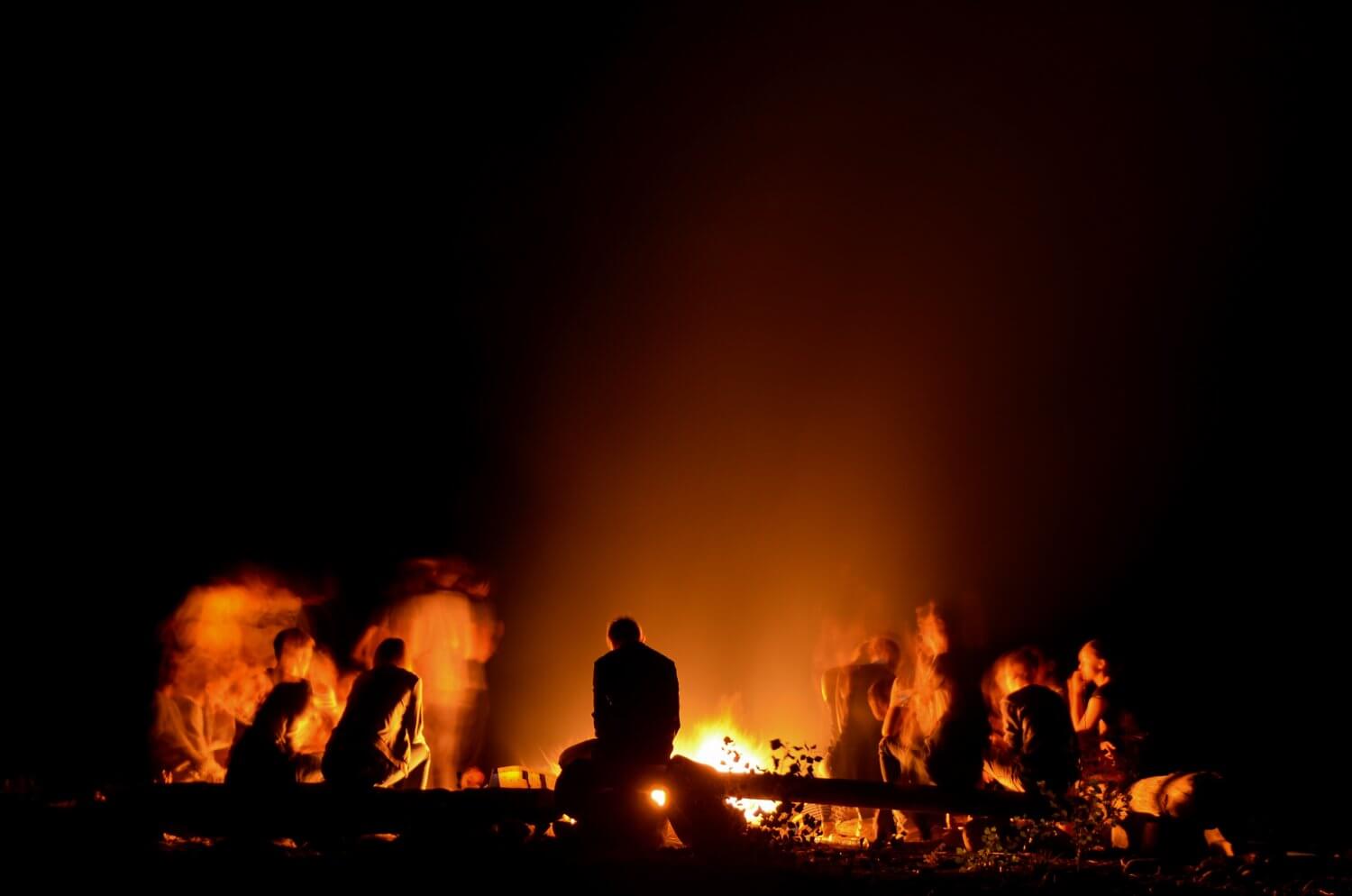
The Easter bonfire is also a tradition mainly practiced in German-speaking regions. On Holy Saturday, a huge bonfire made of tree and shrub cuttings is lit. In some regions, a straw witch doll or a tree trunk symbolizing Judas (the disciple who betrayed Christ) is also thrown into the fire. Most Easter bonfires are social festivals, such as in the Harz (where the Easter bonfires are called “Ostermeiler”), which are celebrated with mulled wine and beer.
Easter in Different Countries
Austria
When bunnies lay eggs at Easter…
This is not the opening line of a fairy tale, but a charming tradition that delights all Austrian children on Easter morning. Because in Austria, Easter is all about the egg. Here, bunnies have the magical power to distribute their colorfully decorated eggs in the garden and place them in a basket. In Austria, it is primarily the Easter bonfires that define the Easter celebration. This popular custom has long been an integral part of Easter night, especially in the Alpine region.
However, Easter customs also vary within the country, as each federal state is characterized by regional peculiarities. In Styria, for example, it is the consecrated fire on Holy Saturday. In Tyrol, on the other hand, the first Easter customs begin with Palm Sunday, with the blessing of palms. During the palm blessing, the entry of Jesus into Jerusalem is honored with so-called “Palmbuschen,” a bouquet of pussy willows decorated with colorful ribbons.
Scandinavia
Here, the traditions are very similar to those in Austria and Germany. But according to legend, in Sweden on Maundy Thursday, the Easter witch Påskkärring flies to her witch mountain Blåkulla. On this day, children dress up as witches with colorful headscarves and broomsticks and go from door to door with an empty coffee pot in hand. They ask for sweets and give homemade Easter letters as a thank you.
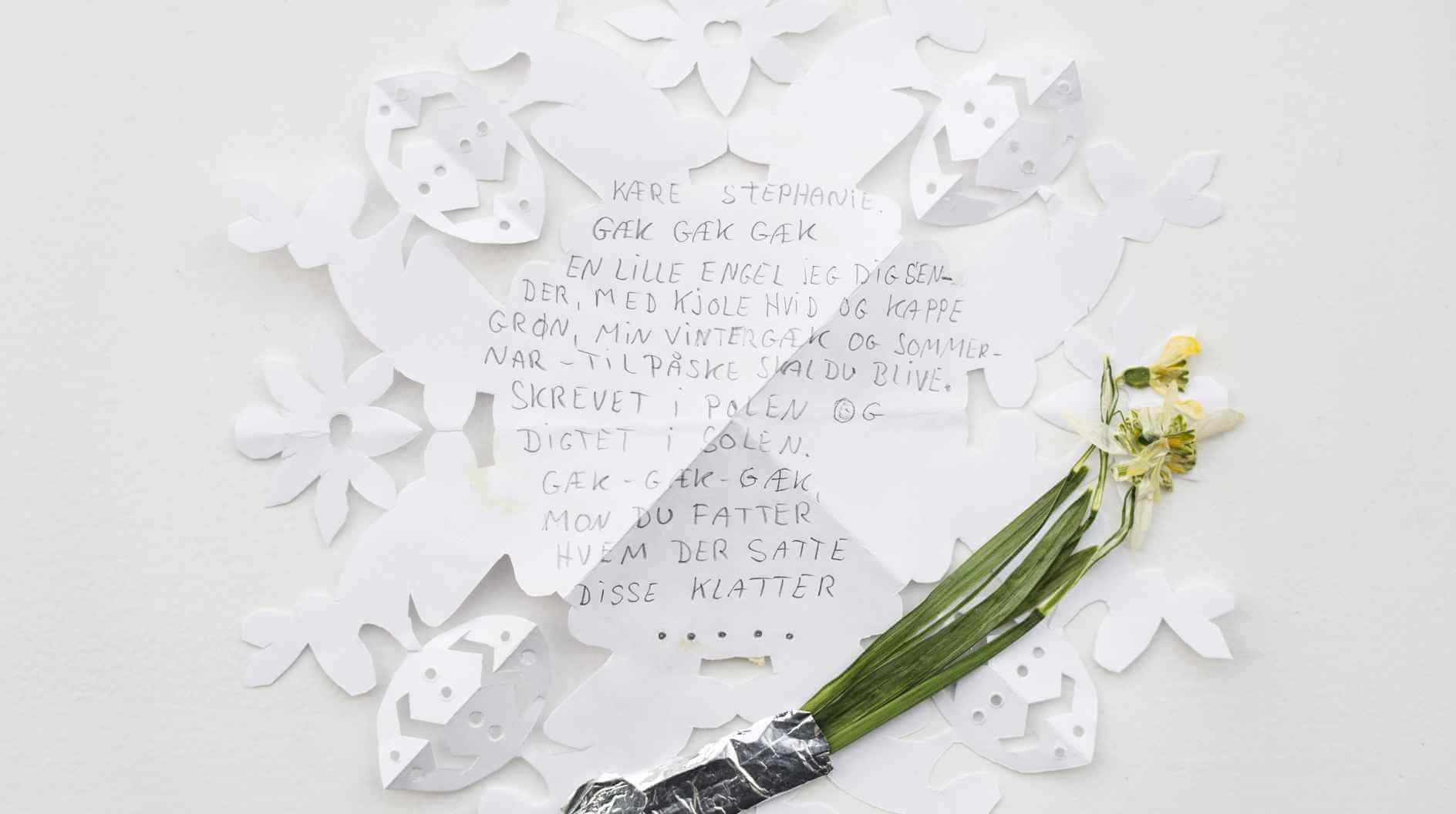
In Denmark, people write Gækkebrev, so-called fool’s letters or secret letters, which are artfully painted, decorated, and cut out. These secret letters are anonymous and contain small verses and poems. The recipient must then guess who the letter is from. If they succeed, they receive an Easter egg. If they don’t guess correctly, they must donate a chocolate egg to the sender.
In Finland, the Easter festival begins as early as Palm Sunday with a particularly contemplative tradition: everyone arms themselves with a birch rod and uses it to strike their friends and family. This is meant to bring good luck for the coming year and symbolizes the palm fronds for Jesus’ entry into Jerusalem.
On Easter Sunday, loud parades take place, where children march through the streets with drums, cans, and anything that makes noise. This is supposed to drive away evil winter spirits and clear the way for spring.
Poland, Hungary, Slovakia
In Poland, there is the custom of Wielkanoc, the “Wet Monday,” at Easter. Therefore, women there must have towels ready on Easter Monday, because on this day, men douse their loved ones with water. This tradition dates back to the Middle Ages, when men broke into the homes of the most beautiful women early on Easter Monday morning and doused them with water. Today, this fortunately happens on the street, mostly with water pistols, water balloons, and buckets. In Hungary, there is a similar custom called Locsolás. Here, however, men must first recite a poem and ask for permission before dousing the ladies with water. In Slovakia, “Wet Monday” exists in the same way, but women are then allowed to take revenge on the men with water attacks on Tuesday.
Czech Republic
At Easter, Czech men are allowed to spank their wives with braided twigs as part of “Whipping Monday.” However, the custom, which is very popular especially in the countryside, has nothing to do with violence. Men ring the doorbells of female neighbors and relatives and hit the women’s legs with the braided twigs. The life force and strength of the young willow branches are supposed to transfer to the touched person and bring them health. However, this custom is not popular with all women! Afterwards, the men receive a gift, usually sweets for the younger ones and homemade plum schnapps Slivovic for the older ones.
France
In France, there are also colorful eggs at Easter, and Easter Sunday is spent searching for the brightly colored and creatively painted eggs. However, in France, the Easter Bunny does not bring the eggs; it is largely unknown to the French.
In France, the bells fly to Rome at Easter.
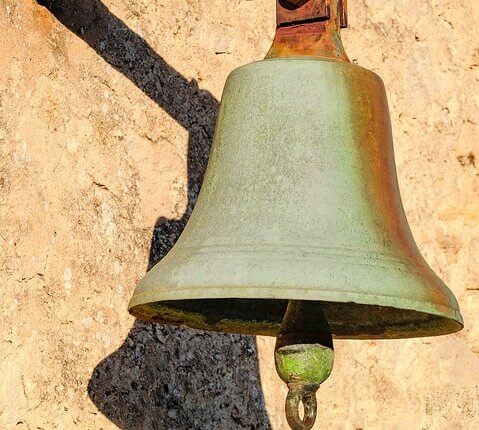 According to tradition, the bells set off for Rome on Maundy Thursday. This story is mainly told to children. On the outward journey, the bells collect the sorrow of Christ’s Passion and then deposit it with the Pope in Rome, where they are blessed anew. There, they receive sweets in addition to the blessing. They then bring these back to France on Easter Sunday, ringing their bells, losing them along the way, and the eggs and sweets land in the gardens.
Greece
In Greece, Easter is the most important festival of the year!
In Greece, there is strict fasting during Holy Week – meat, fish, dairy products, and fats are taboo, and on Easter Sunday, there is a real feast. The Easter lamb is, of course, popular here. It is usually grilled whole over an open fire and served with various appetizers.
But even in Greece, customs vary from place to place. In the south, for example, the festival is celebrated very contemplatively, while in Leonidio, the capital of Arcadia, Easter is celebrated with fireworks. Countless fireworks light up the sky on the night of Easter Sunday to celebrate the resurrection of Jesus. Everyone embraces and prays “Jesus is risen” and wishes each other “chronia pola” (meaning a good year).

Haiti
While colorful eggs are hidden in Europe and searched for by children, kites are flown on the islands, even beyond the national borders, such as in the Dominican Republic. Easter bunnies also have no chance here; they would have melted in the heat before they could hop around the tropical meadows. Children begin building elaborate kites months in advance, which are also lavishly decorated. Colorful like Nordic Easter eggs, so there is a commonality after all. Children also prepare for this in schools and kindergartens, and everyone tries to build the most beautiful and best work of art. Good Friday is the day: all children proudly show off their artwork and demonstrate their kite-flying skills.
However, the “Easter Raras” are somewhat spooky. With rhythmic music from natural instruments, people move through the streets, accompanied by eerily dressed dancers and acrobats. They begin their journey in front of the house of a “Houngan,” a sorcerer. Evil demons are said to be summoned. On Easter Sunday, a feast and chocolate are celebrated.
Italy
“Natale con i tuoi, pasqua con chi vuoi,” in English: “Christmas with your family, Easter with whoever you want.” This is a popular Italian proverb and reflects the significance of Easter for Italians. Because Easter here is not only a celebration with family but also with friends. The festival begins on Good Friday evening with processions, as Good Friday is not a public holiday in Italy. The processions take place in silence, and the church cross is carried through the streets, in remembrance of Jesus’ suffering.
In Florence, there is a special highlight at Easter: the Scoppio del Carro, in English: “The Explosion of the Cart.” At exactly 12 o’clock, with the cannon shot, all the bells in the Piazza del Duomo begin to ring. This is a tradition from the time of the first Crusades, which was intended to protect the Holy Sepulchre from the hands of infidels.
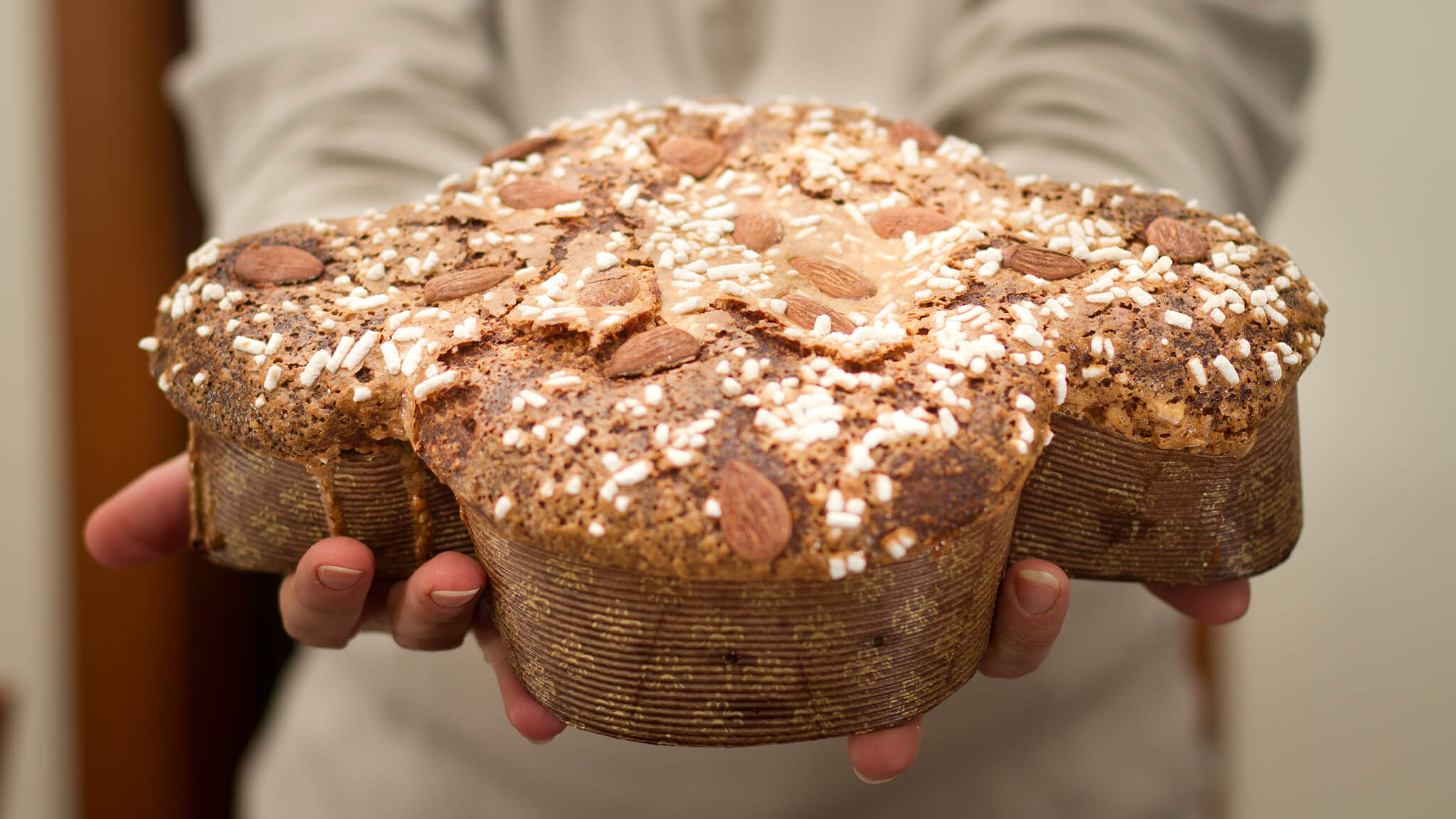
At Easter, Italy also offers many traditional delicacies, such as Colomba Pasquale, a sweet yeast cake with almonds in the shape of a dove. In addition to the numerous processions and religious ceremonies during Easter, a family outing on Easter Sunday is also a fixed part of the Easter traditions.
Australia
In Australia, the marsupial replaces the Easter Bunny. There, after its immigration from Europe, the rabbit has become such a plague that native animal species are threatened.
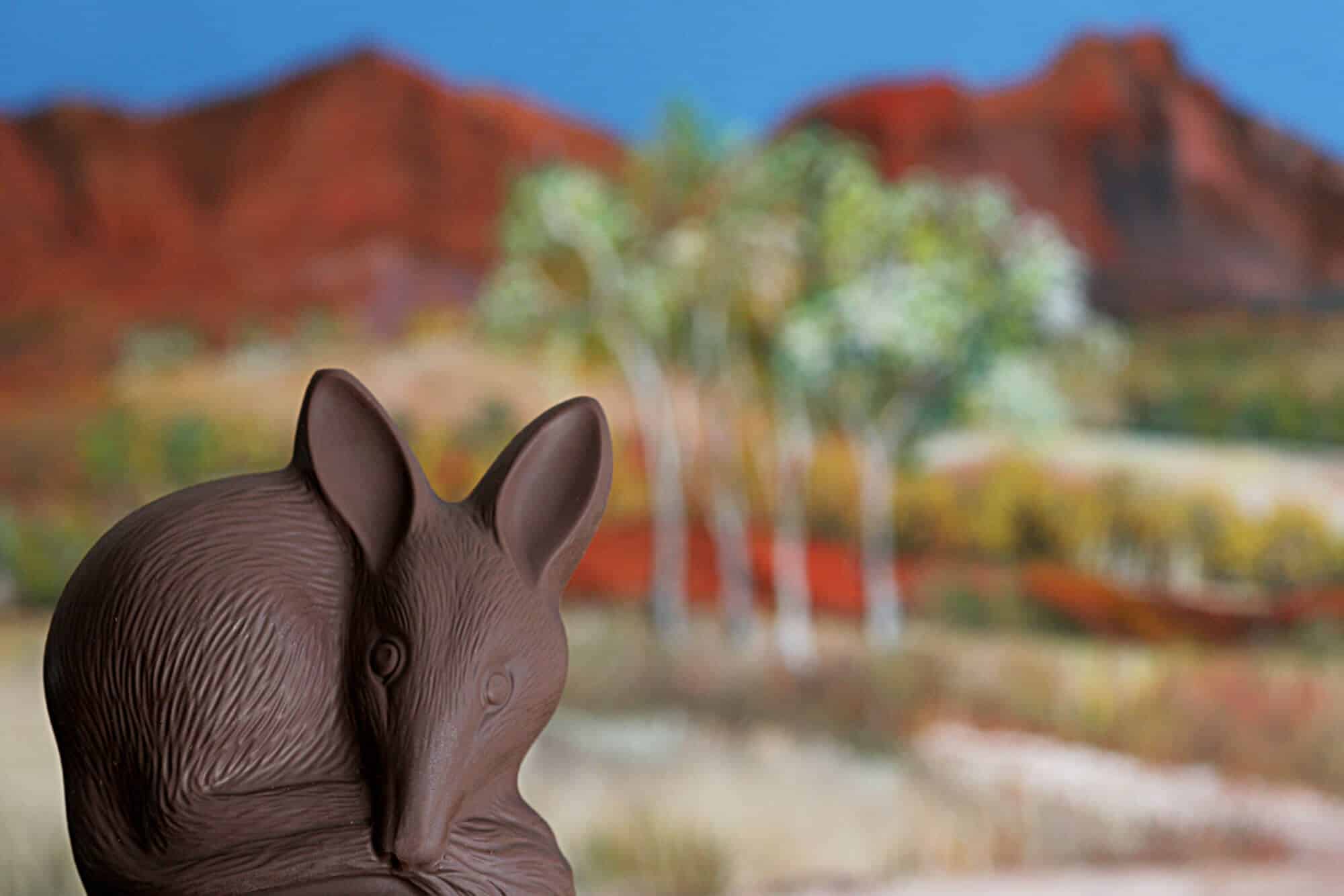
Therefore, it is not very popular there, and the Easter Bunny has been replaced by another animal – the Easter Bilby. This is available in plush and chocolate – an animal whose existence is not even known to most people in this country. But it looks surprisingly similar to the Easter Bunny!
At Easter in Australia, lamb is often eaten, served with potatoes and vegetables. Hot Cross Buns are also very well-known and available everywhere. These are sweet pastries with raisins, on which a white cross is supposed to symbolize the connection to religion.
Mexico
For almost two weeks, Mexicans celebrate Easter with music, dance, and huge Passion plays. In Mexico City, the largest Easter procession in Mexico takes place, attracting many visitors. It is customary here to re-enact the entire Passion story of Christ, from his capture to his resurrection.
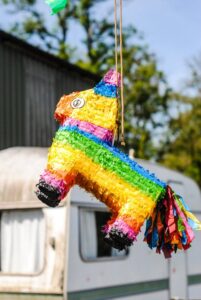 Easter traditions also include the countrywide celebrations, which have the character of a folk festival, where indigenous rituals are merged with Catholic traditions. The streets are colorfully decorated with garlands, and music can be heard everywhere; people dance and wear colorful hats. On Holy Saturday, ritual burnings of Judas effigies take place. For children in some areas, there are the popular Piñatas, which are colorful papier-mâché figures. These are filled with sweets, and children must hit and smash them blindfolded with a stick to get to the treats.
More crazy and interesting Easter customs can be found in the video
In which religions is Easter celebrated?
First, Easter is a festival tied to the Christian faith. In Islam and Judaism, there is no Easter festival in this sense, but in the Jewish faith, there is Passover. Passover is closely linked to Easter in terms of timing because Christ’s Passion took place in the immediate temporal vicinity of the Jewish Passover. However, Easter is a purely Christian festival and is the highlight of the Christian church year. For the entire Christian faith stands or falls with the resurrection.
Easter in English
- Frohe Ostern/ Ein frohes Osterfest = Happy Easter
- die Osterferien = Easter holiday
- der Osterhase = Easter bunny
- Ostereier bemalen, verzieren = to decorate, paint Easter eggs
- das Kreuz = cross
- die Kreuzigung = crucifixion
- die Ostermesse = Easter mass
- Ostersonntag = Easter Sunday
- Ostermontag = Easter Monday
- Gründonnerstag = Holy Thursday
- Osterwoche = Easter week
- Karfreitag = Good Friday
- die Fastenzeit = Lent
Easter in Italian
- Frohe Ostern/ Ein frohes Osterfest = Buona Pasqua
- die Osterferien = ferie pasquali
- der Osterhase = coniglietto pasquale
- Ostereier bemalen, verzieren = dipingi,decorarele uova di Pasqua
- das Kreuz = croce
- die Kreuzigung = crocifissione
- die Ostermesse = il servizio di Pasqua
- Ostersonntag = domenica di Pasqua
- Ostermontag = pasquetta
- Gründonnerstag = giovedì santo
- Osterwoche = settimana di Pasqua
- Karfreitag = venerdì santo
- die Fastenzeit = quaresima
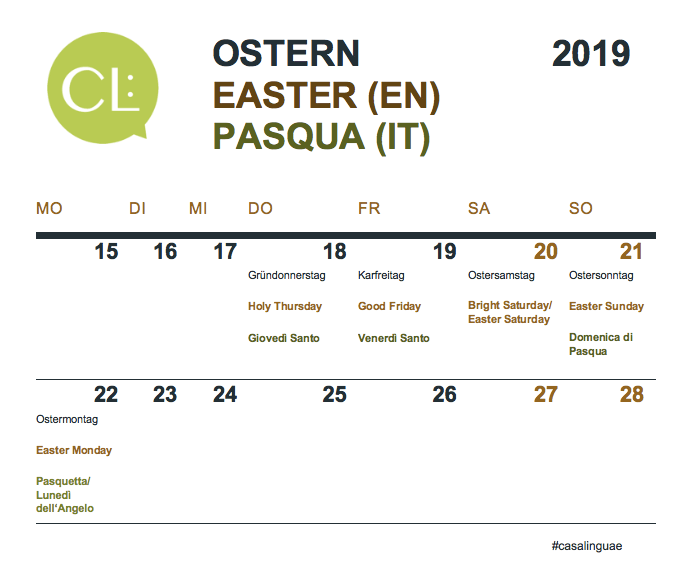
For Christians, Maundy Thursday is the preparation for Good Friday. According to tradition, the Last Supper of Jesus and his twelve disciples took place on this day. Since Jesus was crucified the next day, Maundy Thursday is now considered a day of mourning. In the USA, this day, “Holy Thursday,” is not a public holiday, just as in Italy with “Giovedì Santo.”
Good Friday, however, is a day off for Americans, as this day is celebrated as “Good Friday.” In Italy, “Venerdì Santo” is also not a public holiday. Many Christians commemorate the crucifixion of Jesus Christ on the day after Maundy Thursday and two days before Easter Sunday. Good Friday is considered a day of mourning.
Easter Sunday is one of the most important holidays for people of Christian faith. On this day, the resurrection of Jesus is commemorated. The date changes from year to year as it is calculated according to a lunar calendar. Easter Sunday is simply translated into English as: “Easter Sunday.” This day is not an official holiday in the USA. In Italy, “Domenica di Pasqua” is a public holiday, just like here.
Easter Monday, the day after Easter Sunday, is not a public holiday in the USA. Traditionally, an Easter egg roll takes place on this day, “Easter Monday,” in the White House garden. Italians, however, have the day off on “Pasquetta” or “Lunedì dell’Angelo,” as this day is considered a public holiday.
Easter customs vary worldwide, yet similarities can be observed. Do you know any other interesting Easter customs and traditions?